
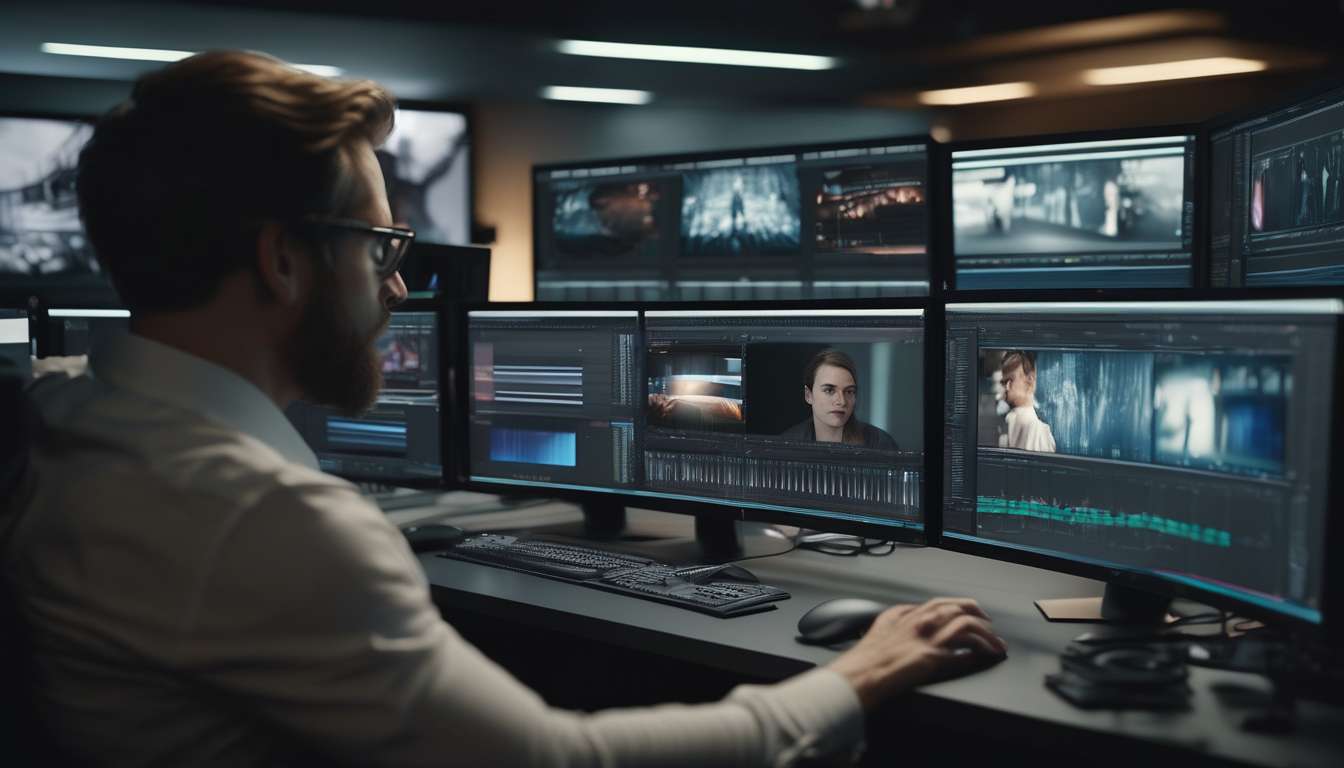
Content Review Workflows Raise Adult Movies Quality Standards
Producing higher standards in adult filmmaking requires challenging the industry’s assumption of quantity over quality.
We view rigorous content review workflows not as bureaucratic burdens but as creative catalysts. When scenes, consent documentation, performer comfort, and technical consistency are scrutinized with care, the resulting work becomes safer, clearer, and ultimately more compelling.
We insist on layered reviews to elevate production values while protecting participants:
- Ethical checks.
- Legal compliance.
- Performance feedback.
- Technical grading.
This approach reframes compliance as craft, turning routine audits into opportunities for storytelling refinement and audience trust-building.
As stakeholders, we commit to:
- Transparency.
- Continuous training.
- Measurable checkpoints that reduce risk and enhance viewer experience.
The shift benefits creators, performers, platforms, and consumers alike, demonstrating that higher standards are not only possible but essential for a mature, sustainable industry.
Ethical Review Frameworks
We evaluate content against established ethical review frameworks to ensure our decisions balance harm reduction, fairness, and user autonomy.
We center our team so everyone feels included in shaping standards that respect performers and audiences alike.
We adopt clear consent protocols that document permissions and boundaries.
- These protocols are collaborative so contributors feel seen and safe.
We integrate technical QA into ethical review: metadata accuracy, face-identity safeguards, and content provenance are vetted alongside moral considerations.
- Metadata accuracy ensures context and intent are preserved.
- Face-identity safeguards protect individuals from misattribution and misuse.
- Content provenance tracks origin and edits to support accountability.
We run iterative compliance checks to confirm workflows match our shared values.
- These routine verifications are not legal adjudication.
We encourage open dialogue, asking reviewers and creators to flag edge cases and propose improvements.
- This practice builds trust and ownership.
We train reviewers to apply ethical principles consistently, using case studies and peer discussion rather than lone judgment.
- Peer discussion reinforces shared standards and reduces bias.
By combining procedural rigor with empathetic practice, we create a review environment where everyone belongs and where quality rises because people and principles guide every decision.
Legal and Compliance Checks
We’ll systematically verify legal obligations, regulatory requirements, and platform policies to ensure every piece of content meets applicable laws and our internal standards.
We create clear checklists so team members feel included and confident during compliance checks, and we align responsibilities across reviewers, legal counsel, and platform liaisons.
We won’t silo tasks; instead we’ll share knowledge so everyone knows how consent protocols integrate with metadata, age-verification records, and retention policies — without repeating performer-consent details reserved for the next section.
We combine automated scans with hands-on review to catch licensing gaps, trademark issues, and regional restrictions.
Our workflows include technical QA steps to validate file integrity, metadata accuracy, and secure storage of sensitive records.
When discrepancies arise, we escalate them with a transparent remediation plan and log outcomes for continuous improvement.
By standardizing these practices, we build a supportive community that trusts the process, reduces legal risk, and raises overall content quality while keeping compliance checks efficient and human-centered.
Performer Consent Protocols
We will obtain, document, and securely store explicit performer consent for every piece of content before publication.
Each consent record will include:
- Identity verification
- Scope of rights granted
- Duration
- Any revocation terms
We will integrate clear consent protocols into our workflow so everyone—performers, reviewers, and producers—knows the rules and feels respected.
We will run compliance checks at multiple stages to confirm:
- Forms are complete
- Dates match shoot logs
- Any special conditions are recorded
We will pair consent reviews with technical QA to verify that media files match consented material.
Technical checks will include:
- Timestamps
- Scene IDs
- Edits and post-production changes
We will maintain an accessible audit trail that team members can consult, reinforcing trust and shared responsibility.
When issues arise, we will escalate promptly, pause publication, and resolve discrepancies collaboratively.
By treating consent as a living document and combining human oversight with systematic checks, we create an inclusive environment where contributors belong and content meets high ethical and legal standards.
Performance Coaching Rounds
We’ll run regular performance coaching rounds where reviewers and producers give focused, actionable feedback to help performers improve delivery, safety, and on-camera confidence.
We create a supportive circle that centers consent protocols and mutual respect, so everyone feels seen and empowered to ask for adjustments.
During each round, we set clear goals, model techniques, and practice short takes so performers can build muscle memory and comfort on set.
We pair coaching with documentation that links suggested changes to compliance checks, making it easy to track progress and acknowledge improvements.
Coaching emphasizes strengths as often as areas to refine to foster trust and belonging.
We coordinate with production to ensure notes are realistic for schedule and risk management, and we follow up to confirm changes were understood and adopted.
By keeping feedback concise, consistent, and tied to measurable outcomes, we help performers grow while maintaining ethical standards and operational clarity.
Technical Quality Assurance
We run systematic technical quality checks on every take.
These checks ensure audio, lighting, framing, and file integrity meet our production standards before approval.
We make technical QA a collaborative habit.
- Everyone on set knows the checklist.
- Everyone trusts the process.
- Everyone feels empowered to flag issues without hesitation.
We tie consent protocols to technical checks.
- Metadata, release forms, and timestamps are verified alongside sound levels and capture settings.
- This ensures legal and ethical safeguards are integrated into the technical workflow.
We conduct compliance checks at multiple stages.
- Ingest
- Post-capture verification
- Pre-archive
This multi-stage approach helps catch problems early and ensures transparent correction.
We standardize procedures to eliminate ambiguity.
- Test tones
- Slate procedures
- Checksum validation
Standardization protects contributors’ rights and dignity.
We keep reports concise and actionable.
- Clear remediation steps
- Assigned owners for follow-up
Concise, shareable reports accelerate fixes and accountability.
This shared approach builds confidence.
Team members feel included, respected, and accountable.
In short, our technical QA ensures content integrity, regulatory adherence, and a respectful, reliable environment for everyone involved.
Visual and Sound Grading
We calibrate visual and audio grading to preserve the creator’s intent, ensure consistent quality across formats, and make final mixes ready for distribution.
We work as a team, listening closely to creators and to one another, so color timing and sound shaping honor storytelling while meeting platform needs.
Our process integrates consent protocols up front, confirming talent permissions before cosmetic adjustments or remixing begins.
During grading sessions we run technical QA to verify codecs, loudness, and color gamut across target devices.
We perform compliance checks to ensure regulatory and platform standards are met.
We prioritize shared responsibility:
- Editors, colorists, and mixers collaborate in real time.
- Team members give constructive feedback and document decisions for approved versions.
- When disagreements arise, we resolve them through focused review, always centering respect for creators and performers.
By blending creative judgment with precise measurements, we deliver cohesive visuals and sound that feel inclusive, consistent, and distribution-ready while upholding ethical and technical standards.
Documentation and Traceability
We document every decision, version, and approval point so teams can trace who changed what, when, and why.
We keep centralized logs that tie edits to reviewers, timestamps, and rationale, creating a shared record that welcomes participation and accountability.
Our process links content notes to consent protocols, so proof of permissions is as visible as creative choices.
We embed compliance checks into each workflow stage and surface their outcomes in dashboards accessible to everyone involved, reducing gatekeeping and reinforcing trust.
Technical QA results — from file integrity to codec conformity — are recorded alongside editorial annotations, making it simple for any teammate to follow an item’s lifecycle.
When disputes or questions arise, the trace lets us resolve issues quickly without finger‑pointing.
We standardize metadata fields and commit messages so newcomers can learn the trail fast and feel included.
By keeping documentation precise, searchable, and collaborative, we strengthen quality, safety, and our sense of collective responsibility.
Continuous Training Programs
We run ongoing training programs that keep teams current on tools, policy changes, and best practices so everyone can contribute confidently and consistently.
We build cohorts that learn together, blending hands-on modules with scenario-based discussions so all voices feel included and valued.
Our curriculum covers consent protocols in detail, ensuring reviewers recognize nuanced cues and handle sensitive situations with respect and uniformity.
We pair technical QA sessions with peer reviews, so practical skills like metadata tagging and error spotting are reinforced by colleagues who share techniques and feedback.
Regular compliance checks are woven into exercises, letting teams practice documentation and escalation workflows until they’re second nature.
We rotate facilitators from different roles to broaden perspectives and strengthen cross-functional bonds.
We track outcomes with clear metrics — accuracy, turnaround, and policy adherence — and iterate training where gaps appear.
By investing in continuous learning, we create a dependable, skilled community that upholds quality standards and treats every contributor as an essential partner.
How are content review teams structured to protect reviewers’ mental health and prevent burnout when regularly reviewing adult material?
We set up rotating shifts, mandatory breaks, and caseload limits to reduce continuous exposure and allow regular recovery time.
We provide trauma-informed training and on-site counseling so reviewers have the skills to manage distress and immediate access to professional support.
We foster peer support groups and give access to mental-health days and resilience resources to build social support and encourage proactive self-care.
We monitor wellbeing metrics and adjust workloads proactively to identify early signs of burnout and intervene before issues escalate.
We ensure staff feel safe, supported, and valued through respectful policies, clear reporting channels, and regular check-ins.
What measures are in place to ensure reviewers’ identities and employment are protected from external stigma or doxxing?
We prioritize reviewer safety and anonymity.
We implement strict access controls, pseudonymous accounts, and role-based permissions so identities aren’t exposed.
We enforce NDAs, monitor for leak attempts, and use secure communication channels and encrypted storage.
We offer legal support, clear reporting paths, and swift disciplinary action for breaches.
We provide training on privacy practices and help staff manage online visibility to reduce stigma and doxxing risks.
How does the review process handle cultural differences in acceptability and norms across international audiences without imposing one regional standard?
Current Question: how the review process handles cultural differences without imposing a single regional standard.
Key approach: We balance respect and inclusion by using diverse reviewer panels, localized guidelines, and community feedback loops.
Principles we follow:
- Avoid one-size-fits-all judgments.
- Prioritize transparency about cultural context.
- Adapt recommendations per market.
Operational measures:
- Use diverse reviewer panels drawn from relevant regions and backgrounds.
- Develop and maintain localized guidelines that reflect regional norms and laws.
- Implement community feedback loops to surface concerns and perspectives.
- Provide opt-in regional content settings so users can choose local norms.
- Continuously update practices in collaboration with local stakeholders.
Outcome: We foster dialogue and continuously update practices with local stakeholders to ensure respectful, pluralistic assessments.
Conclusion
You’ve seen how robust content review workflows lift adult movie quality by centering ethics, legality, and clear consent.
By running performance coaching, technical QA, and visual-sound grading alongside strict documentation, you’ll reduce risk and raise standards.
Staying compliant and traceable, while continuously training your team, makes productions safer and more professional.
Adopt these frameworks consistently, and you’ll deliver content that’s higher quality, more respectful to performers, and better positioned for long-term sustainability.
